

Why I’m writing this
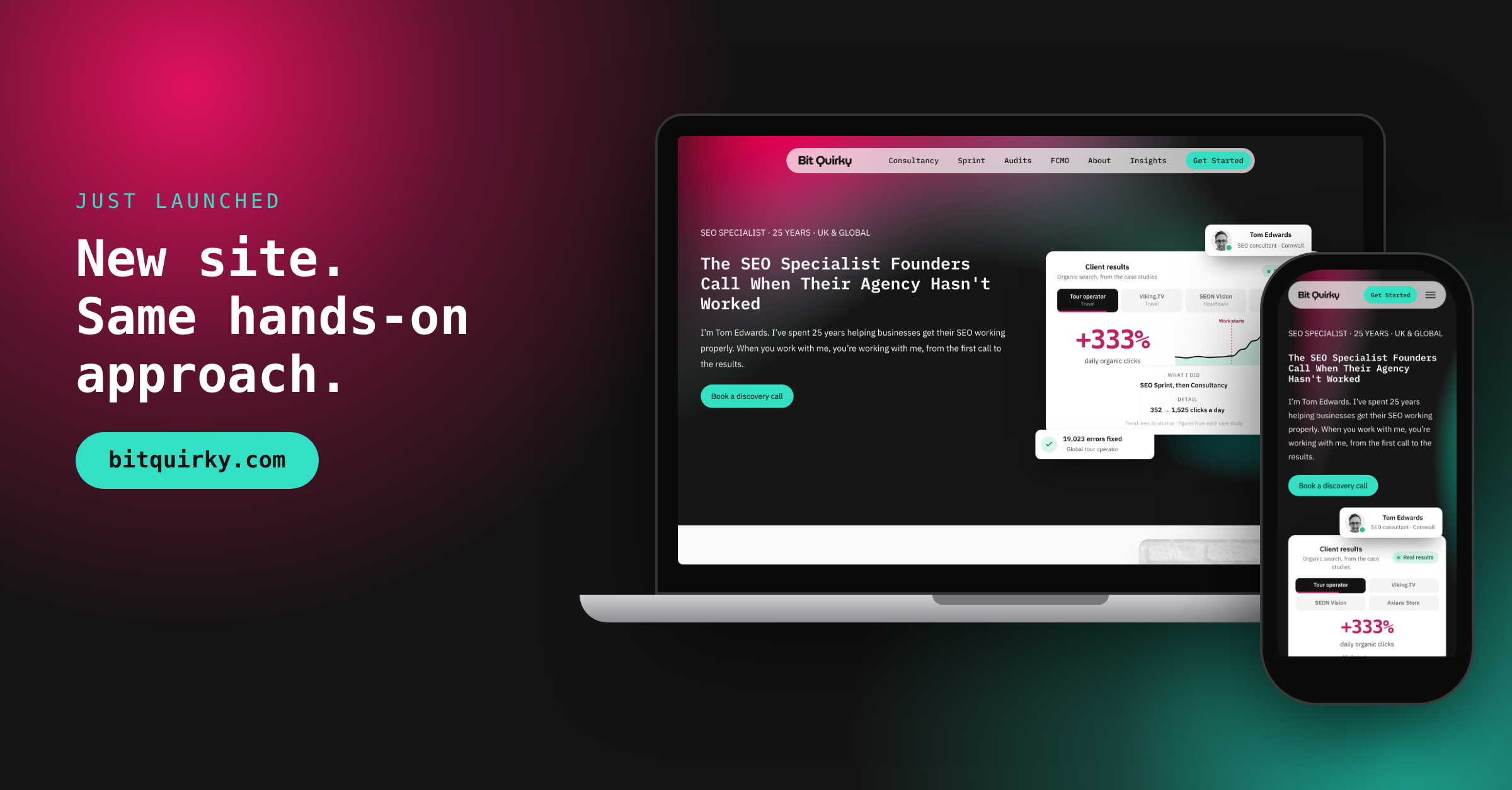
This week I launched a new website. On the surface, it’s a cleaner design and fewer pages. Underneath, it’s the result of 18 months of learning what I’m actually good at, who I can genuinely help, and, just as importantly, who I can’t.
Most consultancy websites only show the wins. I’ve got some of those, and I’m proud of them. But I’ve learned far more from the projects that didn’t go to plan, and I think you deserve to know how I work when things get hard, not just when they go well.
So this is an honest look back. The good, the difficult, and what I’ve changed because of both.
First, some context
In 2023, I was given a 5% chance of survival.
That year I had bacterial meningitis, a stroke, sepsis and a blood clot on the brain. I came through it, and I don’t take that for granted for a single day.
It changed me, and my view on life, forever. It made me appreciate things differently, and it took its toll on me, physically and mentally. The first few months at home are honestly a blur. Memories fade in and out of each other.
I was employed at the time, and I rushed back to the office to try to get some kind of pattern back. It was obvious very quickly that it was the wrong thing to do. I deeply regret that decision, but it’s what shaped Bit Quirky into what it is today. I decided it would stop being a side project and become the way I work, full time, from 2024.
I also made myself a promise. I’d only take on work I believed in, I’d always be honest with clients, even when it wasn’t what they wanted to hear, and I’d keep my client list small enough to give everyone my full attention.
The last 18 months have tested every part of that promise.
What went well
Let’s start with the good bits, because there have been plenty.
The Sprint proved itself. In July 2025, I launched the SEO Sprint: 14 days to find out why a site is struggling and what to do about it. I wasn’t sure if businesses would go for a fixed, focused piece of work instead of a monthly retainer. They did. One global tour operator had traffic that looked healthy but wasn’t turning into bookings. The Sprint uncovered 19,023 hidden errors. After the fixes, their daily organic clicks went from 352 to an average of 1,525. That’s more than four times the traffic, from problems nobody knew were there.
Migrations don’t have to be scary. SEON Vision, a private eye clinic, moved from Squarespace to WordPress, the kind of move that often costs a business its rankings. Instead, organic commercial clicks grew 86%, and their average position went from page five to page one.
Long-term work compounds. Viking.TV started with an audit and a messy backlink profile. A few years of steady, unglamorous work later, they rank for 922% more keywords in the top 100.
None of these were magic. They were the result of a clear process, honest conversations and clients who trusted me to do the job. Which brings me to the projects where that trust wasn’t there.
You can read the full stories in my case studies.
The projects that didn’t go to plan
When I let pressure change how I work
A different global travel business came to me on the back foot. They’d already been through three or four SEOs, and nothing had worked. I understood the frustration. When you’ve been let down that many times, you want results yesterday.
That pressure pushed me to work outside my normal process. I skipped steps I’d never usually skip, because I wanted to show progress quickly. Then I found errors on the site that needed fixing first, and my advice was put aside in favour of pushing out content changes. It was the wrong call, and at that point it was clear we weren’t on the same page. I didn’t feel listened to, and I didn’t feel trusted to do the right thing for them.
Walking away was hard. It felt like failing. But a good process only works if both sides trust it.
What I do differently now: my process isn’t up for negotiation, because it’s what gets results. Every project starts with a clear diagnosis, which is why the Sprint and Audit exist. And on the first call, I’m upfront about how I work, so we both know before we start whether it’s the right fit.
When growth outpaced control
This one came through a referral from a client I’d worked with for years. Their contact was launching a new business in a tough industry, and for 12 months it went brilliantly. Rankings climbed, the business grew, and they started building a small in-house sales and marketing team.
Two months later, things changed fast. The site was hit with an influx of spammy backlinks, thousands a day. At the same time, content was being changed without any planning, and without me knowing. Rankings for key pages, ones that had built trust and authority over the previous year, started dropping quickly.
The moment I raised the spam links, and the link buying alongside them, I knew the project was taking a turn. The in-house team had their own ideas, and that’s their right. But I couldn’t be responsible for results I had no control over. In-house won that day, and I walked away from that one too.
What I do differently now: I agree from the start who owns what, and how changes to the site get made. If a client’s team is growing, I’d much rather work alongside them than around them. Sometimes that means setting direction as a Fractional CMO instead of just doing the SEO. And I’m clear that SEO built over a year can be undone in weeks if nobody’s steering.
What both taught me
I don’t hold grudges about either project. My honest view is that you can’t help everyone. Some people need to do things their way and learn the hard way, and that’s OK. Everyone makes mistakes, me included, and it’s usually the mistakes we learn the most from.
What I got wrong about my own business
Here’s the uncomfortable bit. While I was telling clients to focus, my own website was doing the opposite.
It had pages for nine different industries. It had services called things like “LLM Strategy” that, it turns out, almost nobody searches for. Some pages had prices that didn’t match other pages. If you landed on it, you’d have struggled to work out what I actually do, or how to start working with me.
I think I was afraid of turning work away. If I listed everything, surely someone would find something they needed?
It doesn’t work like that. When you try to be everything to everyone, you end up being nothing in particular to anyone. And the projects that went wrong taught me the same lesson from a different angle: the best work happens when the scope is clear, the process is trusted and both sides know exactly what they’re getting.
What’s changed
So I’ve rebuilt everything around a much simpler idea. There are now three clear ways to work with me:
- SEO Sprint (£10,500, fixed). Something’s gone wrong and you need answers fast. Fourteen days, ending in a prioritised 30-day plan.
- SEO Audit (from £950). Your site is stable and you want a thorough health check, with a clear list of what to fix.
- SEO Consultancy (£750 a day). Ongoing, senior, hands-on support, usually two to four days a month.
Alongside those, I offer Fractional CMO support for businesses that need marketing leadership beyond search, and a £295 AI Visibility Check for anyone wondering whether ChatGPT and Google’s AI Overviews actually recommend them.
I’ve also narrowed the industries I focus on to the ones where I’ve got real results to show: travel, healthcare and eCommerce.
What hasn’t changed is the bit that matters most. You work with me directly, from the first call to the results. I keep my client list small. And I’ll always tell you the truth, even when it’s not what you were hoping to hear.
What’s next
The last 18 months taught me that saying no is as important as saying yes. No to projects where I can’t do my best work. No to cutting corners under pressure. And no to a website that tries to please everyone.
What I’m saying yes to is fewer, better projects with people who want to do things properly. If that sounds like you, I’d love to hear what you’re working on.
Book a free discovery call. It’s a straight conversation, with no hard sell. If I’m the right person to help, I’ll tell you how. If I’m not, I’ll tell you that too, and point you somewhere better.
Thanks for reading. And to every client who’s trusted me over the last 18 months, including the ones who taught me the hard lessons: thank you.
Tom
Read more about my story.

